Budgeting
Zero-Based Budgeting for Beginners: Give Every Dollar a Job
Zero-based budgeting explained simply: how it works, a worked example, how to do it with biweekly pay, and the mistakes beginners make in the first month.
On this page
- How zero-based budgeting works
- Why it works for many people
- A worked example
- Adapting it to biweekly paychecks
- Step-by-step: your first zero-based budget
- Mistakes beginners make
- What to do when something unexpected happens
- Zero-based vs. other budgeting styles
- Make it faster with a template
- The bottom line
- A zero-based plan for one biweekly paycheck
- Tools you can use
Zero-based budgeting sounds technical, but the idea is simple: before the month (or paycheck) starts, you assign every dollar of income to a job until there's nothing left unassigned. "Zero" doesn't mean your bank account hits zero. It means income minus planned jobs equals zero. This guide explains the method, walks through an example, and shows how to adapt it to biweekly pay.
How zero-based budgeting works
- Start with your take-home income for the period.
- List every job your money needs to do: bills, groceries, gas, debt payments, savings goals, fun.
- Assign amounts until income minus assignments equals exactly zero.
- During the period, spend according to the plan and adjust categories if something changes, keeping the total at zero.
The difference from a typical budget is that "leftover" isn't left to chance. Leftover money gets a job too, usually savings or extra debt payments.
Why it works for many people
- Nothing slips through the cracks. Small unplanned purchases are what usually drain a budget. When every dollar has a job, it's easier to notice when one is about to be spent on something else.
- Priorities become visible. You decide in advance how much goes to savings and debt, instead of hoping something is left at the end.
- It's flexible. If groceries run high, you move money from another category. The budget still balances.
A worked example
Take-home income for the month: $3,000.
| Job | Amount |
|---|---|
| Rent | $1,150 |
| Utilities and phone | $210 |
| Car payment and insurance | $390 |
| Groceries | $450 |
| Gas | $160 |
| Card minimum payments | $140 |
| Extra debt payment | $150 |
| Emergency fund | $100 |
| Holiday sinking fund | $50 |
| Household and personal | $100 |
| Fun money | $100 |
| Total assigned | $3,000 |
Income minus assigned jobs equals zero. Every dollar has a purpose.
Adapting it to biweekly paychecks
If you're paid every two weeks, do a zero-based plan per paycheck instead of per month. Each paycheck covers the bills due before the next one arrives, plus its share of groceries, gas, savings, and fun. Then every paycheck's plan balances to zero on its own. This avoids the trap of a monthly plan that looks balanced while the first half of the month is short. See how to budget biweekly paychecks for how to assign bills to paychecks.
Step-by-step: your first zero-based budget
- Gather a month of statements. Look at real spending, not guesses.
- List fixed bills with amounts and due dates.
- Estimate flexible spending (groceries, gas, household) from your statements.
- Add savings and debt goals. Even small amounts.
- Add a fun category. Budgets without any fun money tend to fail.
- Balance to zero. If you're over, trim flexible categories or goals. If you're under, assign the rest to a goal.
- Track as you go. Check categories every few days in the first month.
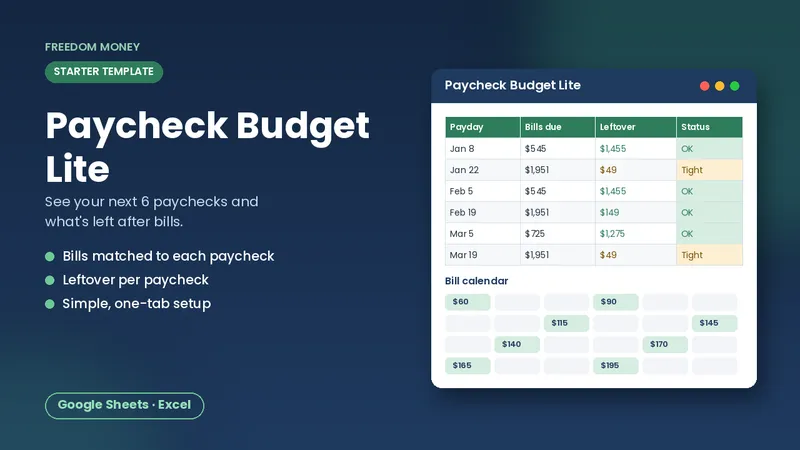
Free: Paycheck Budget Lite
A simple starter spreadsheet for Google Sheets or Excel. List your take-home pay and bills and see what each paycheck has left. Free, instant download.
Download the free templateMistakes beginners make
- Forgetting irregular costs. Car registration, annual subscriptions, and gifts. Add sinking funds for them.
- Being unrealistic. Cutting groceries by half on paper doesn't make it happen. Start with what you actually spend and trim gradually.
- Not adjusting mid-month. Moving money between categories is part of the method, not a failure.
- Giving up after month one. The first month is always the messiest. Most people find the numbers settle by month three.
- Treating a zero balance on paper as an empty account. Keep a small buffer in checking so timing differences don't cause overdrafts.
What to do when something unexpected happens
Say the car needs a $200 repair. In a zero-based budget, you don't just overspend. You decide where the $200 comes from: maybe $100 from fun money and $100 from the holiday fund, or from your emergency fund if it's a real emergency. The budget still balances, and you made a conscious choice.
Zero-based vs. other budgeting styles
- 50/30/20 and other percentage rules give rough targets for needs, wants, and savings. They're simple but less precise.
- Envelope budgeting is a cash or digital version of zero-based budgeting: each category gets an "envelope" of money.
- Pay-yourself-first focuses on moving savings automatically, then spending the rest freely. It can be combined with a zero-based plan.
There's no single right method. Zero-based budgeting tends to suit people who want clarity and control, especially while paying off debt or building savings.
Make it faster with a template
Doing a zero-based plan by paycheck is quick in a spreadsheet: list bills once, set your paydays, and see what each paycheck has left to assign. The Money Reset Bundle includes a Biweekly Paycheck Budget for the paycheck-level plan, plus trackers for debt, savings goals, and side income, so every "job" you assign has a place to live. The free Lite version is a good way to try the idea first.
The bottom line
Zero-based budgeting is just deciding in advance what every dollar will do. Start with real numbers, include fun and irregular costs, balance to zero, and adjust as life happens. After a few cycles, it becomes a quick routine, and you'll know exactly where your money goes.
A zero-based plan for one biweekly paycheck
Take-home pay for this paycheck: $1,450. Bills due before the next payday: rent half ($575), phone ($65), car insurance ($140). Every-paycheck costs: groceries ($210), gas ($80), household ($45). Goals: card extra payment ($150), emergency fund ($75), holiday sinking fund ($25). Personal fun money: $85.
Add it up and you get exactly $1,450. The next paycheck gets its own plan covering the bills due after it, and so on. Each paycheck balances on its own, so the first half of the month can't quietly borrow from the second half. After a few cycles you'll notice which categories always run over, and you can adjust their amounts instead of being surprised each time.
Tools you can use
You can run a zero-based budget with a notebook, a spreadsheet, or an app. A spreadsheet is a good middle ground: it's free, does the adding for you, and you can see the whole plan on one screen. Whatever tool you choose, keep one number visible at all times: "left to assign." When it reads zero, your plan is done.
Frequently asked questions
Does zero-based budgeting mean my account is at $0?
No. It means every dollar of income is assigned to a job, including savings. Keep a small buffer in checking for timing.
Can I do zero-based budgeting with biweekly pay?
Yes. Build a zero-based plan for each paycheck covering the bills due before the next payday.
What if I overspend a category?
Move money from another category so the plan still balances, and adjust next period's amounts if needed.
This guide is general educational information, not financial, tax, legal, or insurance advice. Examples are illustrations, not predictions. See our disclaimer.