Budgeting
How to Make a Budget When You Live Paycheck to Paycheck
A calm, practical plan for budgeting when you live paycheck to paycheck: prioritize essentials, map bills to paydays, build a tiny buffer, and break the cycle step by step.
On this page
- Step 1: Protect the essentials first
- Step 2: Map every bill to a payday
- Step 3: Find your true leftover (even if it's negative)
- Step 4: Look for quick, painless wins
- Step 5: Build a tiny buffer
- Step 6: Use the extra paychecks
- Step 7: Tackle debt that drains each paycheck
- Avoid traps that make it worse
- Do a five-minute check every payday
- Celebrate progress
- Start with the free template
- The bottom line
- A sample first month
- Talk to someone if you need help
Living paycheck to paycheck is exhausting. Every bill feels urgent, and one surprise can knock everything over. A budget won't create money out of thin air, but it can make the money you have go further, prevent late fees, and slowly build breathing room. This guide is a calm, step-by-step plan that starts where you are.
Step 1: Protect the essentials first
When money is tight, order matters. Most people put these first:
- Housing (rent or mortgage)
- Utilities that keep the home running (electric, water, heat)
- Food
- Transportation to work
- Essential insurance and medications
Then minimum debt payments, then everything else. If you can't cover something, contact the provider before the due date. Many utilities and lenders have hardship programs or payment arrangements, and asking early usually gives you more options. The CFPB has guidance on talking to creditors at consumerfinance.gov.
Step 2: Map every bill to a payday
Write your next four paydays on a calendar. Under each, list the bills due before the following payday. This single step prevents most late fees, because you'll see a shortfall coming weeks ahead instead of the day before. Our guide to budgeting biweekly paychecks covers this in detail.
Step 3: Find your true leftover (even if it's negative)
For each paycheck: take-home pay − bills assigned − groceries and gas for two weeks. If it's negative, you know exactly where to focus. Options include:
- Asking to move a due date to a lighter paycheck
- Lowering a flexible category for that period
- Requesting a payment arrangement on one bill
- Pausing a non-essential subscription for a month
Step 4: Look for quick, painless wins
You don't have to cut everything. Look for two or three changes that free up money without making life miserable:
- Subscriptions: list every recurring charge from your statements. Cancel or pause ones you don't use.
- Phone plan: compare your current plan's price with lower-cost options from the same or other carriers.
- Insurance: get a couple of quotes once a year; rates vary.
- Bank fees: if you pay monthly or overdraft fees, ask about fee-free account options.
- Groceries: plan a week of meals around what's on sale, and shop with a list.
Redirect whatever you free up immediately, or it'll be absorbed into everyday spending.
Step 5: Build a tiny buffer
The cycle of paycheck to paycheck is mostly a timing problem. A small buffer, even $100–$300, means a late deposit or small bill doesn't trigger overdraft fees. Save a small fixed amount each paycheck, like $10–$25, into a separate savings account. When the buffer reaches your first target, keep going toward a starter emergency fund.
Step 6: Use the extra paychecks
If you're paid biweekly, two months a year usually have three paydays. That third paycheck isn't needed for regular bills if your budget is built on two. Use it to build your buffer in one shot or to pay off a small debt and free up its monthly payment. See three-paycheck months.
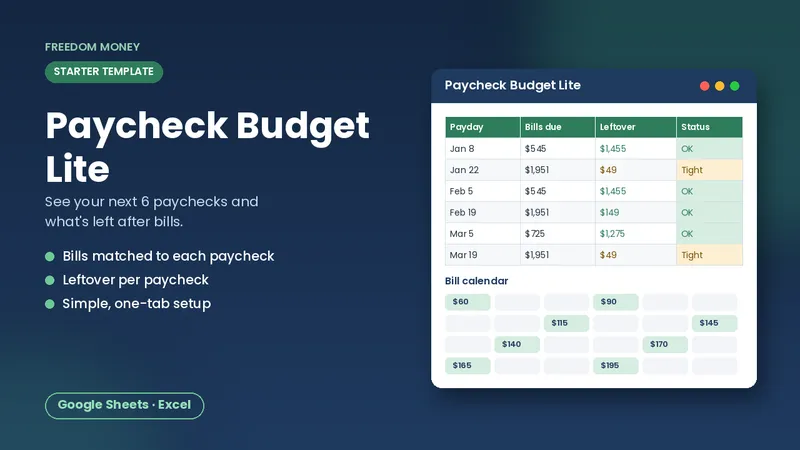
Free: Paycheck Budget Lite
A simple starter spreadsheet for Google Sheets or Excel. List your take-home pay and bills and see what each paycheck has left. Free, instant download.
Download the free templateStep 7: Tackle debt that drains each paycheck
High-interest debt and large minimum payments keep the cycle going. Once your buffer exists, put any extra toward one debt at a time, rolling each freed-up payment into the next. Our snowball vs. avalanche example shows how much faster rollover payments work than minimums alone.
Avoid traps that make it worse
- Payday loans and high-cost cash advances can carry very high fees and create a cycle of repeat borrowing. The CFPB explains how payday loans work on its website.
- "Debt relief" companies that charge big fees upfront.
- Overdraft as a budget tool. Overdraft fees add up fast. Consider turning overdraft coverage off for debit card purchases if your bank allows it.
Do a five-minute check every payday
- Confirm what landed in your account.
- Pay or schedule this paycheck's bills.
- Move your small buffer amount.
- Set aside two weeks of groceries and gas.
- Look ahead at the next paycheck's bills.
Consistency matters more than perfection. Missing a week isn't failure; just pick up again on the next payday.
Celebrate progress
Breaking the paycheck-to-paycheck cycle usually happens in small steps: the first month with no late fees, the first $100 buffer, the first debt paid off. Notice those. They're proof the plan is working.
Start with the free template
If you want a simple place to begin, our free Paycheck Budget Lite spreadsheet helps you list bills and see what each paycheck has left, in Google Sheets or Excel. When you're ready for the full year with 26 paychecks, warnings, and savings tracking, the Biweekly Paycheck Budget builds on the same idea.
The bottom line
Put essentials first, map bills to paydays, find a few painless savings, and build a tiny buffer. Then use extra paychecks and rollover debt payments to make each month a little easier than the last. It's not about being perfect; it's about getting one paycheck ahead.
A sample first month
- Week 1: Map the next four paydays and their bills. Call one provider to move a due date if a paycheck is short.
- Week 2: List every subscription and cancel or pause at least one. Move that amount to a new buffer account.
- Week 3: Plan a week of meals from what you already have plus sale items.
- Week 4: Check the buffer balance, celebrate the first deposit, and set the next month's small transfer.
Four small steps, one per week. None of them requires earning more, and together they usually make the next month feel a little calmer.
Talk to someone if you need help
If bills are consistently more than your income, you don't have to sort it out alone. Nonprofit credit counseling agencies can review your budget and explain options, and many offer free or low-cost first sessions. The CFPB explains how to choose a reputable credit counselor and which warning signs to avoid. Local community action agencies and 211 (dial 2-1-1 or visit 211.org) can also connect you with help for utilities, food, and rent in many areas. Asking early, before accounts fall behind, usually gives you the most options.
Frequently asked questions
What should I pay first when money is tight?
Most people prioritize housing, essential utilities, food, transportation to work, and essential insurance and medications, then minimum debt payments.
How do I stop living paycheck to paycheck?
Map bills to paydays, cut a few recurring costs, build a small buffer, then use extra paychecks to pay down debt.
Is a free budget template enough to start?
Yes. A simple paycheck budget that shows bills and leftover per paycheck is plenty to get started.
This guide is general educational information, not financial, tax, legal, or insurance advice. Examples are illustrations, not predictions. See our disclaimer.